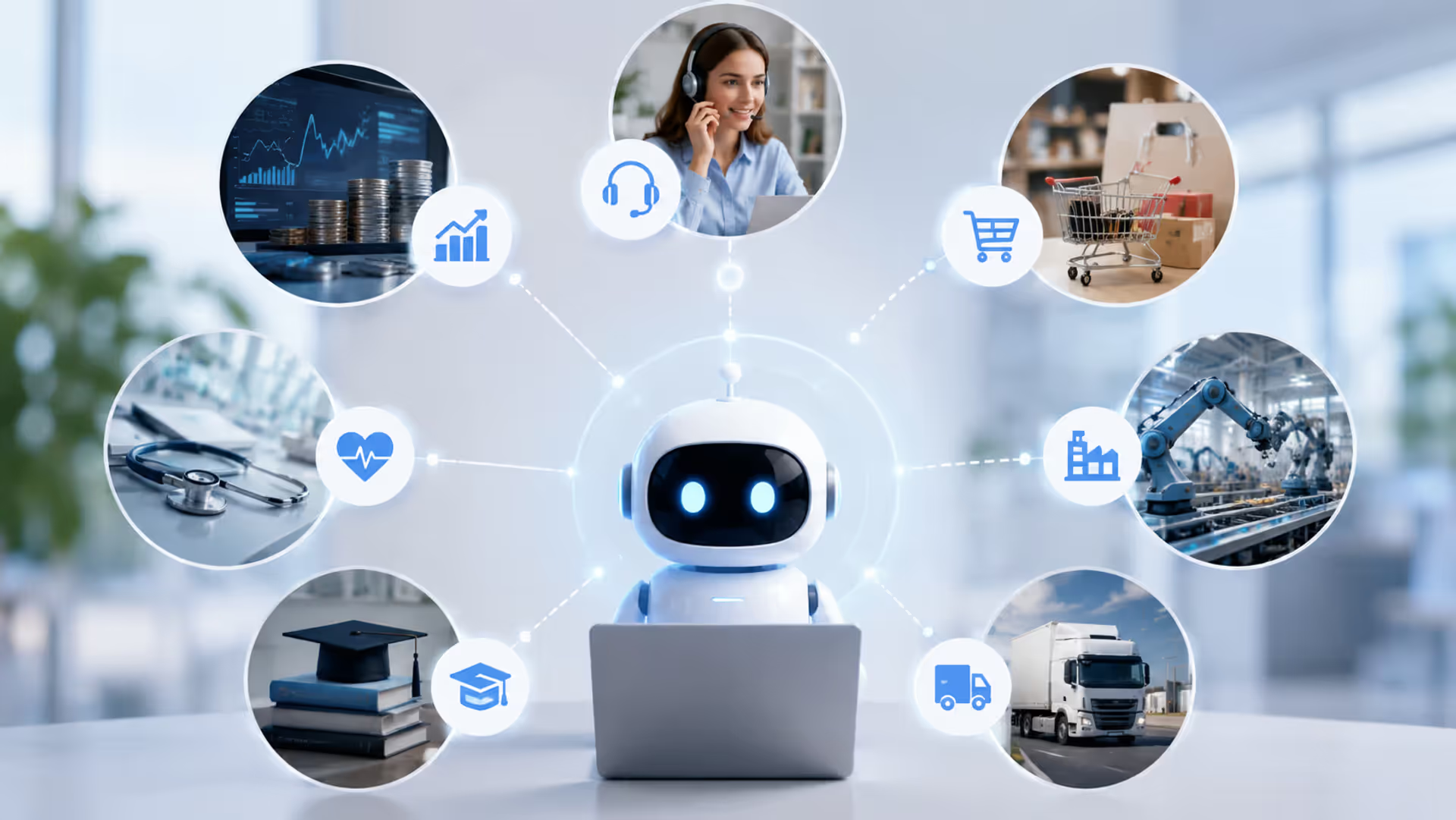
Picture this: your sales team shows up Monday morning and finds 200 qualified prospects already engaged, personalized conversations in progress, and meeting requests sitting in the calendar—all created over the weekend without anyone lifting a finger.
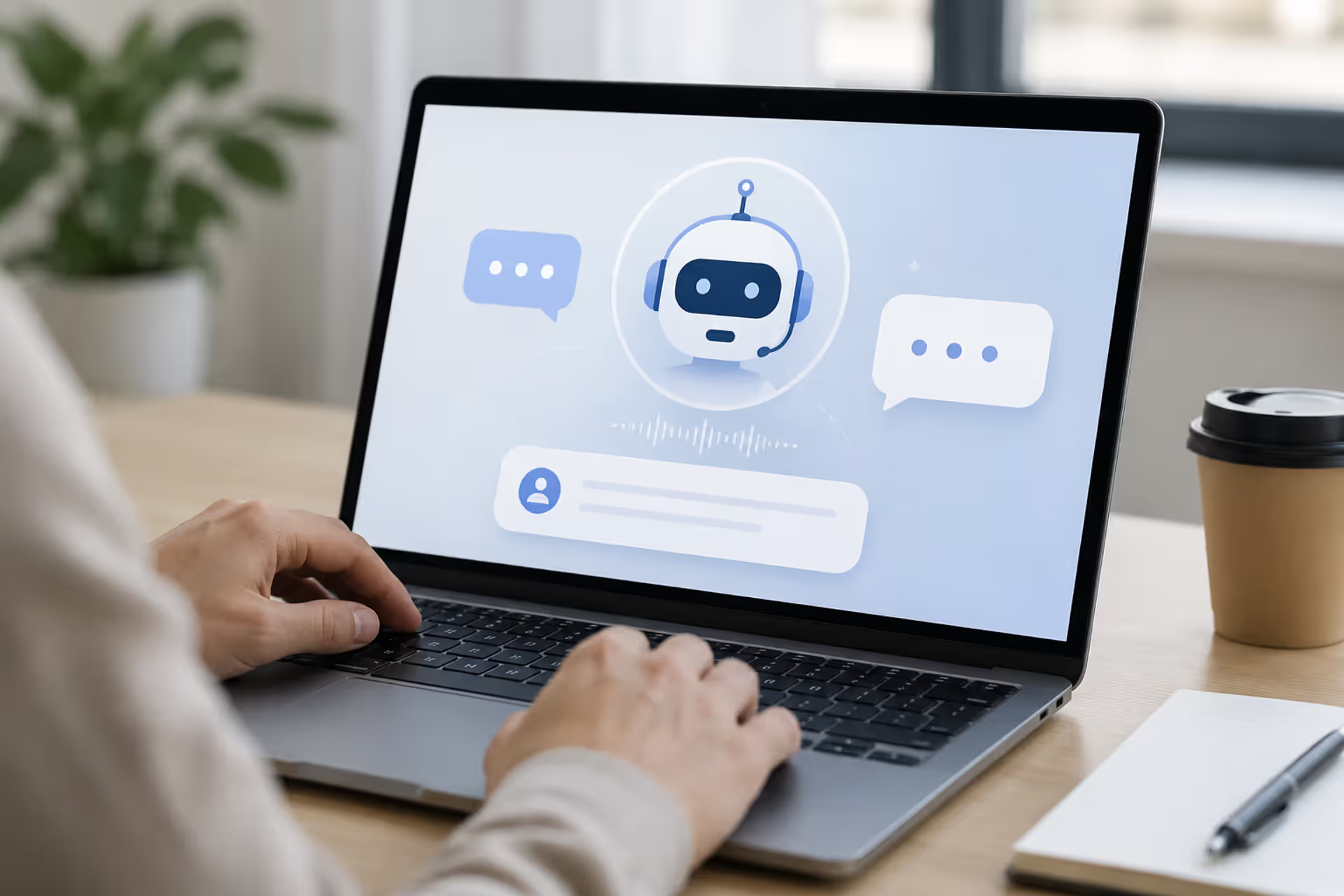
An AI SDR is software that handles prospecting, writes outreach messages, and screens leads—the stuff that used to eat up hours of your sales team's day. These systems use machine learning, natural language tech, and automation to find buyers, craft personalized emails, and manage follow-ups. The goal? Get rid of the boring, repetitive work so your actual salespeople can focus on building relationships and closing deals.
Things have changed fast. Early tools were basically glorified email schedulers. Now? The good ones analyze buying signals, adjust messages based on how people respond, and even handle basic qualification chats. More B2B companies are using these to reach more prospects without hiring more people—it's reshaping how sales teams operate.
How AI Sales Development Representatives Function
Today's AI sales development representative platforms combine several technologies to mimic what human SDRs do every day. We're not talking about simple scheduled emails anymore—these systems interpret data, make decisions, and adjust their approach based on what's working.
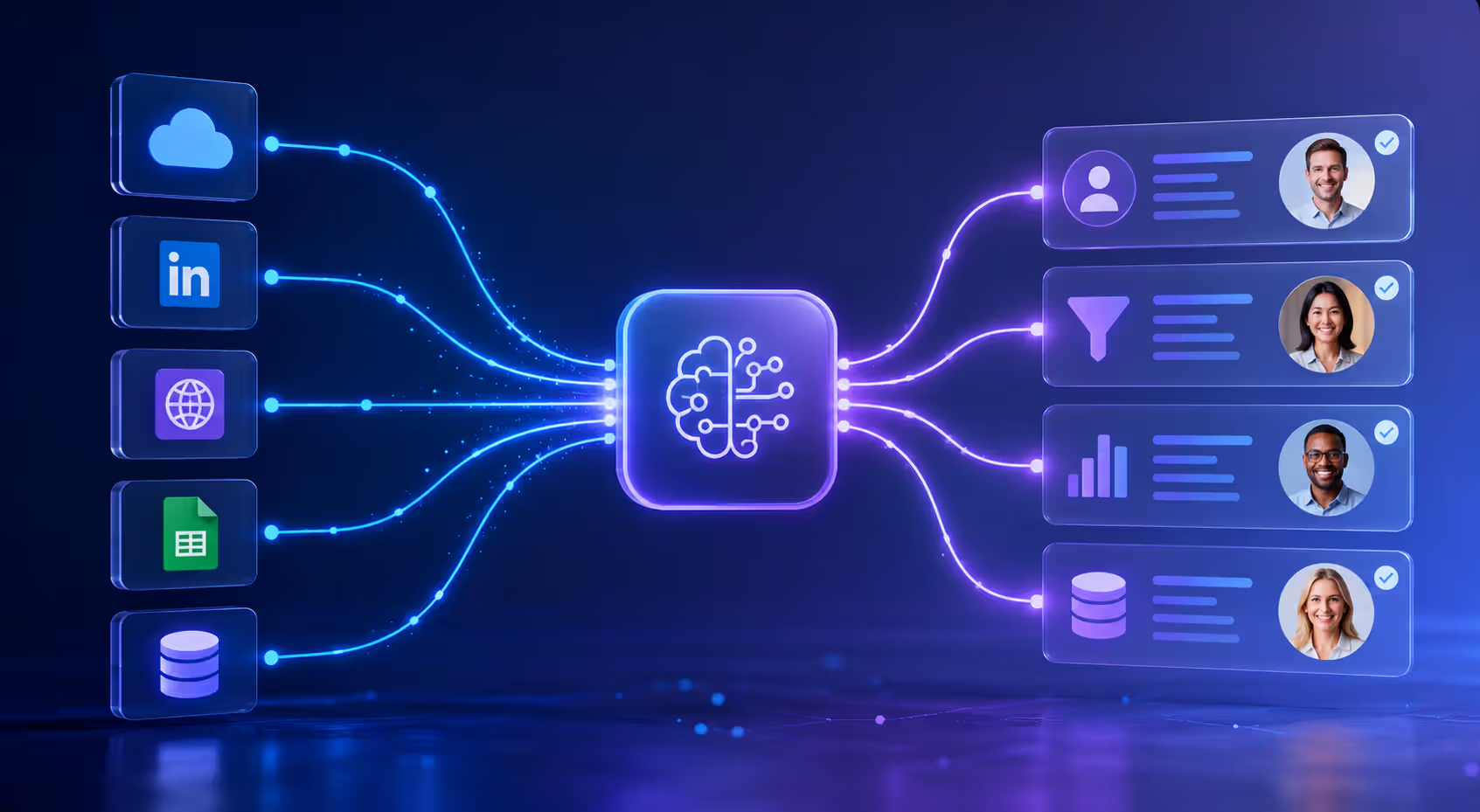
It starts by plugging into your existing tools. The platform connects to your CRM, marketing automation software, and sometimes external data sources. From there, it pulls information about your ideal buyers: company size, industry, tech stack, funding rounds, job titles, and behavior like website visits or content downloads. This data becomes the foundation for everything else.
Next up: lead scoring. The system evaluates each prospect against your criteria and assigns scores based on things like revenue, budget signals, growth indicators, or content engagement. Most teams start simple here, then layer in complexity as they learn which factors actually predict who'll buy.
Author: Isabelle Norwyn;
Source: aleanetwork.net
Once a prospect hits your threshold, the AI writes the outreach. Modern platforms don't just fill in template blanks. They study your best-performing messages, check the recipient's recent LinkedIn activity or company news, and generate something that feels custom. Better systems even adjust tone, length, and value prop based on the person's role and industry.
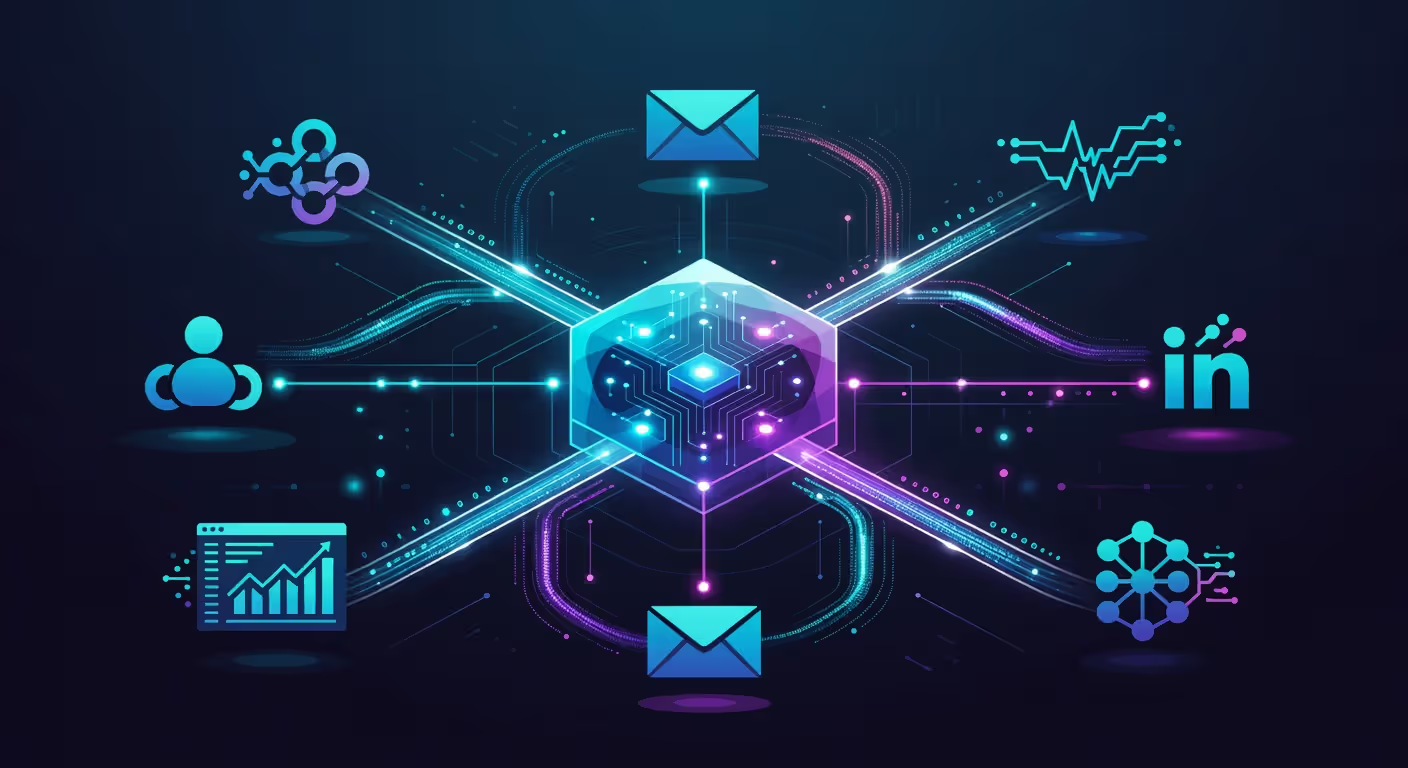
Then comes the ai sdr workflow for follow-ups. The AI figures out when to reach out again, which channel to use (email, LinkedIn, text), and when to try a different angle. If someone opens three emails but doesn't respond, the system might shift tactics—maybe bringing up competitors or sharing a case study from their industry.
AI SDRs don't replace the human element in sales—they amplify it. The best implementations use AI to handle pattern recognition and repetitive tasks at scale, freeing sales professionals to focus on the nuanced conversations that actually close deals.
— Chen Sarah
CRM integration is where sales ai agents explained becomes real and practical. The platform logs every interaction, updates prospect status, and pings your team when someone shows buying intent. A pricing question automatically alerts a rep while giving them the full conversation history and engagement timeline.
Here's the thing: most ai sdr workflow setups don't run on autopilot. The best teams build in human checkpoints. Sales managers review message templates weekly, approve major changes to scoring rules, or jump in personally when high-value prospects engage. You're not trying to eliminate humans—you're moving them to higher-value work.
Companies often expect perfection right away. That's unrealistic. These platforms need training data to get better. Performance improves as the system learns which messages get responses, which subject lines get opens, and which prospect types actually convert. Give it time—the investment pays off.
AI SDR vs Human SDR: Key Differences
The real question isn't which one wins. It's understanding where each excels and where each falls short. They're built for different things.
Feature
AI SDR
Human SDR
Cost
$500–$5,000/month subscription plus setup fees
$60K–$120K yearly salary plus benefits and equipment
Speed
Handles hundreds of personalized messages per hour
Sends 50–80 quality touches per day
Personalization
Data-driven customization based on patterns
Intuitive adjustments with emotional awareness
Lead Volume
Juggles thousands of active conversations
Manages 50–100 prospect relationships effectively
Complex Objections
Struggles with nuanced pushback or skepticism
Picks up on subtext and pivots naturally
Relationship Building
Limited to transactional interactions
Builds genuine trust over time
Setup Time
2–6 weeks to configure and optimize
3–6 months to reach full productivity
Scalability
Scales instantly to any volume
Needs hiring, training, and ramp time
AI outreach agents crush it when you need volume and consistency. They don't get tired, moody, or distracted. When your strategy involves reaching massive markets with straightforward value props, automation delivers.
The catch? AI can't read the room. It misses subtle hesitation, can't adjust strategy mid-conversation, and doesn't build the authentic trust that comes from real human connection.
When to Use AI Outreach Agents
A few scenarios make AI SDRs particularly valuable. First, when you're targeting large markets with clear qualification criteria. If your ideal customer profile boils down to data points—employee count, tech stack, growth rate—AI can execute that targeting at scale humans can't match.
Second, when your sales cycle starts with education. Prospects need to understand they have a problem before they'll consider solutions. AI-driven nurturing works well here. The system sends case studies, shares educational content, and gradually warms leads until they're ready to talk.
Third, when speed matters strategically. Think product launches, event promotions, or time-sensitive offers—situations where you need to saturate the market fast. Human teams can't scale that quickly without sacrificing quality.
Author: Isabelle Norwyn;
Source: aleanetwork.net
Fourth, for reactivating old leads. You've got thousands of dormant contacts who went cold. AI can systematically work through that list, testing different messaging angles to see what resonates. It's tedious work humans hate but machines handle without complaint.
Finally, when you operate across time zones and geographies. International expansion, 24/7 engagement, prospects who respond outside business hours—AI never sleeps.
When Human SDRs Still Matter
Despite AI's capabilities, human SDRs remain essential in specific situations. Complex enterprise sales with long cycles and multiple decision-makers need human judgment. Navigating office politics, understanding power dynamics, and building consensus across departments—that's beyond what AI can do.
Strategic accounts deserve personal attention. When individual customers represent significant revenue, you can't risk algorithmic mistakes. Understanding unique organizational challenges and positioning solutions accordingly requires human sophistication.
Handling sophisticated objections favors humans. AI might address "no budget" or "bad timing" with canned responses. But when prospects say "we tried something similar three years ago and it bombed," you need someone who can dig into why it failed, explain what's changed, and rebuild confidence through real conversation.
Relationship-heavy industries—where trust and personal connection drive purchases—still need human SDRs. Professional services, premium B2B products, sectors with long sales cycles and repeat business all benefit from the rapport skilled reps create.
When your brand promises concierge service or premium experience, automated outreach sends mixed signals. You can't claim personalized attention while using bots for first contact. It undermines your positioning.
Common AI SDR Tools and Platforms
The ai sdr tools overview landscape has exploded. Three main categories dominate: dedicated AI SDR platforms, sales engagement tools with AI features, and CRM-native automation.
Dedicated platforms are built specifically for AI-driven outreach. They bundle prospecting databases, AI message generation, multi-channel sequencing, and analytics. These position themselves as all-in-one systems handling everything from finding prospects to booking meetings.
Sales engagement platforms have added AI to existing workflow automation. They started as tools for managing email sequences and call cadences, then layered in machine learning for send-time optimization, message testing, and predictive analytics. Their advantage? Maturity—they've been running sales workflows for years, with intelligence added on top of proven foundations.
CRM-native options live inside Salesforce, HubSpot, or Microsoft Dynamics. They're designed to work within your existing system rather than adding another tool to your stack. The tradeoff: sometimes less sophisticated than specialized platforms, though seamless data flow often makes up for it.
When evaluating platforms, a few features matter most. Data quality trumps everything. Even the smartest AI can't fix bad contact info. Check whether the platform includes verified contact databases or if you need to bring your own data.
Customization depth is huge. Can you train the AI on your brand voice? Can you build sophisticated qualification logic? Some tools offer basic if-then rules while others support complex multi-variable scoring.
Integration requirements vary wildly. Some platforms play nice with diverse systems. Others have limited API access or force manual data exports. Map your tech stack before committing—creating another data silo defeats the purpose.
Compliance features are mandatory now. The platform should auto-process unsubscribe requests, honor suppression lists, and maintain audit trails for regulations. More on compliance in a bit.
Think about the learning curve. Some platforms need data science chops to configure. Others are built for sales ops teams without technical backgrounds. Match platform complexity to your team's skills.
Author: Isabelle Norwyn;
Source: aleanetwork.net
How AI Powered Outreach Automation Works in Practice
Let's walk through a real ai powered outreach automation workflow from start to finish. This reflects how it actually works, not theory.
Step 1: Finding prospects and building lists. The AI starts by discovering potential customers. It might scan your CRM for contacts matching your ideal profile who haven't been contacted recently. Or it queries third-party databases using specific criteria—companies with 50–200 employees in fintech that raised Series A funding in the last 18 months.
The system enriches these records with additional intelligence. It monitors LinkedIn for job changes, tracks company news for expansion announcements or product launches, and spots buying signals like pricing page visits or content downloads.
Step 2: Segmentation and personalization. Not every prospect gets the same message. The AI groups leads into segments based on industry, role, company size, or behavioral patterns. A CFO at a 500-person company gets different positioning than a VP of Sales at a 50-person startup.
For each segment, the AI creates message variations. It tests different subject lines, opening hooks, value prop angles, or calls-to-action. Machine learning models predict which combinations will perform best based on historical data.
Step 3: Initial outreach. Messages go out across chosen channels—usually email first, sometimes LinkedIn connection requests or InMail. The AI picks send times based on when similar prospects have engaged before. Finance sector prospects might get messages at 7 AM, while tech contacts get them at 10 AM.
The system watches delivery metrics, open rates, and responses in real-time. If a batch bounces or gets poor engagement, it can pause the campaign and alert you—maybe the subject line triggered spam filters or the data source had quality issues.
Step 4: Follow-up sequences. This is where the ai sdr workflow shows real value. Based on prospect behavior, the AI decides what to do next. Someone who opened the email twice without responding gets different follow-up than someone who ignored it completely.
The system might wait three days, then send a shorter message highlighting a specific pain point. Still no response? It might switch channels—a LinkedIn message or relevant content. The sequence adapts based on engagement.
Step 5: Managing conversations. When someone responds, the AI analyzes the message. Is it polite deflection? An information request? An objection? Simple responses—"not interested," "remove me"—get processed automatically. The system unsubscribes them and logs it.
Substantive replies route to human reps. But the AI provides context: full conversation history, the prospect's engagement timeline, relevant company info, and suggested talking points based on what's worked with similar prospects.
Step 6: Tracking performance and optimizing. Throughout, the system collects performance data. What subject lines got the best open rates? Which value props generated the most replies? What follow-up timing worked best for each segment?
This intelligence feeds back into the AI's models. Over successive campaigns, it gets better at predicting what'll work. Message templates evolve, segmentation gets more refined, and the whole system becomes more efficient.
Real example: A B2B SaaS company targeting mid-market retail implemented an AI SDR to re-engage 10,000 dormant leads. The system segmented by retail category (fashion, electronics, home goods) and customized messaging around inventory challenges specific to each vertical.
Within six weeks, the AI deployed 47,000 messages across email and LinkedIn, generated 890 responses, and scheduled 127 discovery calls. The human SDR team only engaged after prospects showed interest. Cost per qualified meeting dropped from $340 to $89.
That's theory meeting reality.
Mistakes Companies Make When Implementing AI SDRs
Despite the potential, plenty of implementations fail. Here are the common traps that derail teams.
Over-automation without oversight. The biggest mistake? Treating an AI SDR as "set it and forget it." Teams configure the system, launch campaigns, and assume it'll run itself. Then they're shocked when response rates tank or complaints pile up.
AI needs ongoing monitoring. Check message performance weekly, review sample conversations, and watch for warning signs like rising unsubscribe rates or spam complaints. The system learns from data, but it can learn the wrong lessons without your guidance.
Dirty data. Garbage in, garbage out. When your CRM has outdated contacts, duplicate records, or incomplete info, the AI wastes effort reaching people who changed jobs two years ago or sending generic messages because it lacks context.
Before deploying an AI SDR, clean your data. Remove duplicates, verify emails, update job titles. It's boring work, but it dramatically improves everything downstream.
Brand voice misalignment. AI generates messages based on patterns in training data. Without good examples of your brand voice, it produces generic corporate-speak indistinguishable from every other sales email.
The fix: feed the system your best-performing human-written messages. Show it what great looks like for your brand. Then review AI-generated content regularly to ensure alignment. Your messaging should sound distinctly like your company, not robotic.
Ignoring compliance. This mistake has serious legal consequences. CAN-SPAM in the US, GDPR in Europe, CASL in Canada—these regulations have teeth. You can't just email anyone and hope for the best.
Make sure your AI SDR honors unsubscribe requests immediately, includes required opt-out language, and maintains suppression lists. When reaching EU prospects, you need documented legitimate interest or consent. Compliance isn't optional.
Wrong use cases. Not every sales motion benefits from AI SDRs. When selling highly complex solutions requiring extensive discovery to determine fit, automated outreach might do more harm than good.
Similarly, if your success depends on warm intros and referrals, cold AI outreach could hurt your reputation. Know where AI helps and where it doesn't.
Poor human handoff. The moment a prospect shows interest is critical. When your AI books a meeting but the human rep shows up unprepared, or there's a long delay before follow-up, you'll lose opportunities.
Establish clear handoff protocols. When does a conversation move from AI to human? What info does the rep need? How quickly must they respond? The transition should feel seamless from the prospect's perspective.
Measuring the wrong things. It's tempting to celebrate activity metrics—emails sent, open rates, even reply rates. But what actually matters is qualified meetings scheduled and deals closed.
An AI SDR sending 10,000 emails with a 2% reply rate isn't successful if none convert to opportunities. Focus on business outcomes, not activity volume.
FAQ: AI SDR Questions Answered
Will AI SDRs completely replace human sales reps?
No—and that's not what they're designed to do. AI SDRs handle top-of-funnel work: prospecting, initial outreach, and basic qualification. They excel at repetitive tasks and high-volume management. But they can't navigate sophisticated sales conversations, build deep relationships, or handle complex objections. The winning strategy combines AI for scale and efficiency with human reps for nuance and relationship development. Think of AI as augmenting your team's capabilities, not replacing them.
How much does an AI SDR cost compared to hiring a human?
AI SDR platforms typically run $500 to $5,000 monthly depending on features, volume capacity, and support level. Add setup costs—anywhere from a few thousand to $20,000 for implementation and configuration. By comparison, a human SDR costs $60,000 to $120,000 annually in compensation plus benefits, equipment, and training. The break-even usually happens when you need to scale beyond 3–4 human reps. Remember, you're not choosing one exclusively—most teams deploy both strategically.
What data does an AI SDR need to work effectively?
At minimum, you need accurate contact info (email addresses, LinkedIn profiles), company data (size, industry, location), and clearly defined ideal customer profile criteria. Better results come from adding behavioral data—website visits, content downloads, email engagement history—and tech stack data like what tools prospects currently use. The system also needs examples of successful past outreach to learn your messaging style. Data quality matters more than quantity; 1,000 verified, enriched contacts will outperform 10,000 outdated records.
Are AI SDRs compliant with CAN-SPAM and GDPR?
The technology can work compliantly, but it's entirely dependent on how you configure and use it. Good platforms include features for managing unsubscribes, maintaining suppression lists, and documenting consent. But compliance responsibility ultimately falls on you. You must ensure you have legal basis for contacting prospects (legitimate interest, consent, or existing business relationship), honor opt-out requests immediately, and include required disclosures in messages. GDPR adds complexity for EU prospects—you need clear documentation of your legal basis and data processing practices. Never assume the tool handles this automatically; verify your specific workflows meet regulatory requirements.
How long does it take to implement an AI SDR?
Technical setup usually takes 2–4 weeks—connecting to your CRM, configuring integrations, importing data, and establishing initial workflows. But getting real value takes longer. You'll spend another 2–4 weeks testing messages, refining targeting criteria, and optimizing based on early results. Most companies see meaningful results within 6–8 weeks, but the system keeps improving over months as it accumulates more data. Plan for a 90-day ramp period before judging success. And expect to dedicate ongoing time to monitoring and optimization—this isn't a one-time project.
Can AI SDRs handle complex B2B sales?
It depends on where you use them in the sales process. For initial outreach and basic qualification in complex B2B, AI can work well. It can identify potential buyers, share educational content, and surface prospects who show interest. But as deals progress and conversations get more nuanced, human involvement becomes necessary. Complex B2B typically involves multiple stakeholders, political navigation, custom solutions, and consultative selling—all areas where humans excel and AI struggles. The best approach uses AI to generate and qualify leads at scale, then transitions to experienced reps for the actual sales process.
The shift toward AI SDRs isn't about replacing your sales team—it's about giving them leverage. The technology handles repetitive, data-heavy tasks that bog down human reps, freeing your team to focus on what they do best: building relationships and closing deals. But success requires thoughtful implementation, continuous oversight, and realistic expectations about what AI can and can't do. Start with a clear use case, measure outcomes that matter, and treat the AI as a team member that needs training and management, not a magic solution that runs itself.
AI visibility tools monitor how often your brand appears in AI-generated responses across ChatGPT, Perplexity, and Gemini. Unlike traditional SEO tools that track Google rankings, these platforms measure citations, mentions, and context in AI answers—helping you optimize for generative engine visibility.
Discover how conversational AI assistants use NLP and machine learning to understand context and hold natural dialogues. This guide covers technology fundamentals, use cases, implementation strategies, and how to avoid common challenges when deploying AI assistants for business.
AI voice agents combine speech recognition, natural language processing, and voice synthesis to conduct natural phone conversations. Learn how the technology works, what capabilities modern systems offer, and which industries benefit most from automated voice interactions.
Explore real-world AI agents examples across customer service, sales, enterprise operations, and specialized applications. This guide covers actual deployments from companies like Klarna, Maersk, and McDonald's—complete with workflows, results, and lessons learned from enterprise implementations.
The content on this website is provided for general informational and educational purposes only. It is intended to explain concepts related to AI tools, agents, developer infrastructure, coding assistants, APIs, and productivity workflows.
All information on this website, including articles, guides, and examples, is presented for general educational purposes. Outcomes and tool performance may vary depending on implementation, skill level, and use case.
This website does not provide professional AI consulting, development services, or guarantees of results, and the information presented should not be used as a substitute for consultation with qualified AI or software development professionals.
The website and its authors are not responsible for any errors or omissions, or for any outcomes resulting from decisions made based on the information provided on this website.